
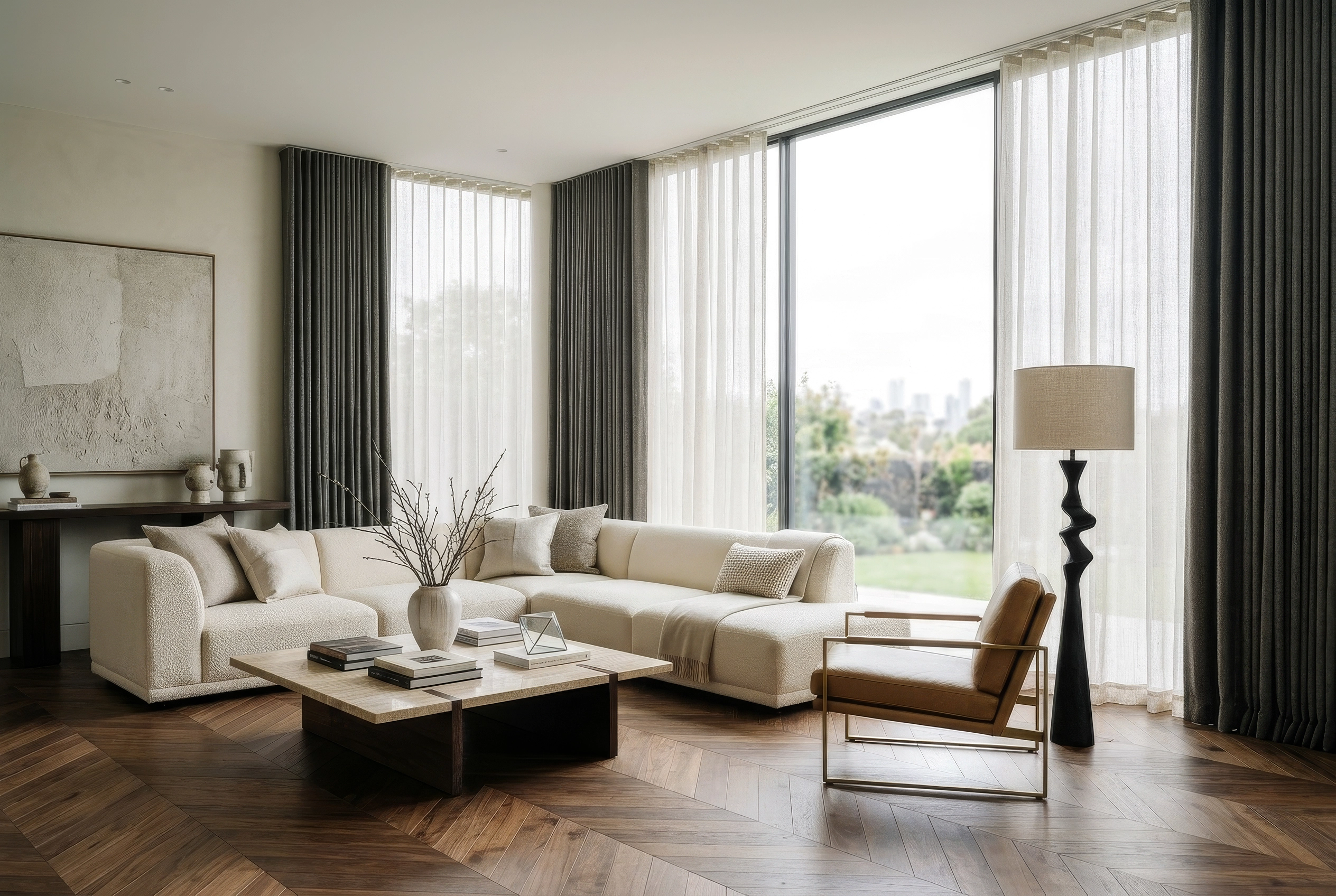
Curtains are more than a finishing touch. The right curtain fabrics influence natural light, privacy, texture and the overall atmosphere of an interior. From relaxed residential spaces to sophisticated hospitality projects, selecting the right materials is essential to creating a cohesive and functional design.
Understanding the characteristics of different curtain fabrics helps interior designers balance aesthetic preferences with practical requirements, creating window treatments that complement the architecture and furnishings.
1. Understanding Different Curtain Fabrics Types
Different types of curtain fabrics offer distinct visual and functional qualities. Linen curtain fabric introduces natural texture and understated elegance, making it suitable for relaxed, contemporary and Mediterranean interiors. Velvet curtain fabric, with its rich surface and substantial weight, creates a more dramatic effect, adding depth and sophistication to residential and hospitality spaces.
For lighter interiors, sheer curtain fabric, such as voile, filters daylight while maintaining a sense of openness. Cotton and blended curtain fabrics offer further versatility, with their suitability depending on composition, weave and finish.
For a refined approach to window dressing, explore FOZ COA, a sheer curtain fabric that brings softness and lightness to interior spaces, or BAUMÉ, a wool curtain fabric that introduces natural texture and a more substantial feel. Both offer distinctive ways to complement an interior design scheme through texture, material and light.
The choice of material should reflect the intended atmosphere of the space and the role curtains play within the wider design scheme.
2. How Fabric Weight, Drape and Light Affect Curtains
When selecting curtain fabrics, consider how the material’s weight, weave and fabric drape influence the finished result. Lightweight fabrics tend to create softer, more fluid folds, while heavier materials generally produce a fuller appearance and a more structured silhouette.
Transparency and opacity are equally important. Sheer materials allow diffused daylight to enter a room, whereas denser fabrics provide greater privacy. Appropriate lining can further influence light control, the appearance of the curtains and their overall finish.
Understanding curtain fabric weight and drape helps designers select materials that complement window proportions, architectural features and the intended use of each space.
3. Choosing Curtain Fabrics for Different Interior Styles
The most successful curtain fabrics complement the colours, textures and materials already present in an interior. Neutral tones and subtle weaves create visual continuity, while expressive patterns, rich colours and tactile surfaces can establish a focal point.
Consider how curtains interact with upholstery, cushions, wallcoverings and furniture finishes. Combining contrasting textures introduces depth, while a coordinated palette creates a more harmonious composition.
Drapery fabric selection should therefore be considered as part of the overall interior concept, rather than as an isolated decorative decision.
See more: “10 Modern Interior Design Ideas for a Characterful Space“
4. Practical Considerations Before Choosing Curtain Fabric
Beyond aesthetics, evaluate the fabric’s composition, maintenance requirements and suitability for its intended application. In residential and contract projects, durability, cleaning specifications and relevant fire-performance requirements may also influence the selection process.
Reviewing technical specifications alongside colour, texture and finish helps ensure that the chosen curtain fabric meets both the design brief and the practical demands of the space.
Discover the Potential of Curtain Fabrics
The right curtain fabrics bring together functionality, texture and visual character. By considering material properties alongside the wider interior scheme, designers can create window treatments that enhance a space and contribute to a cohesive design vision.
Explore Aldeco’s fabric collections for inspiration and discover materials suited to distinctive interior design projects.


