
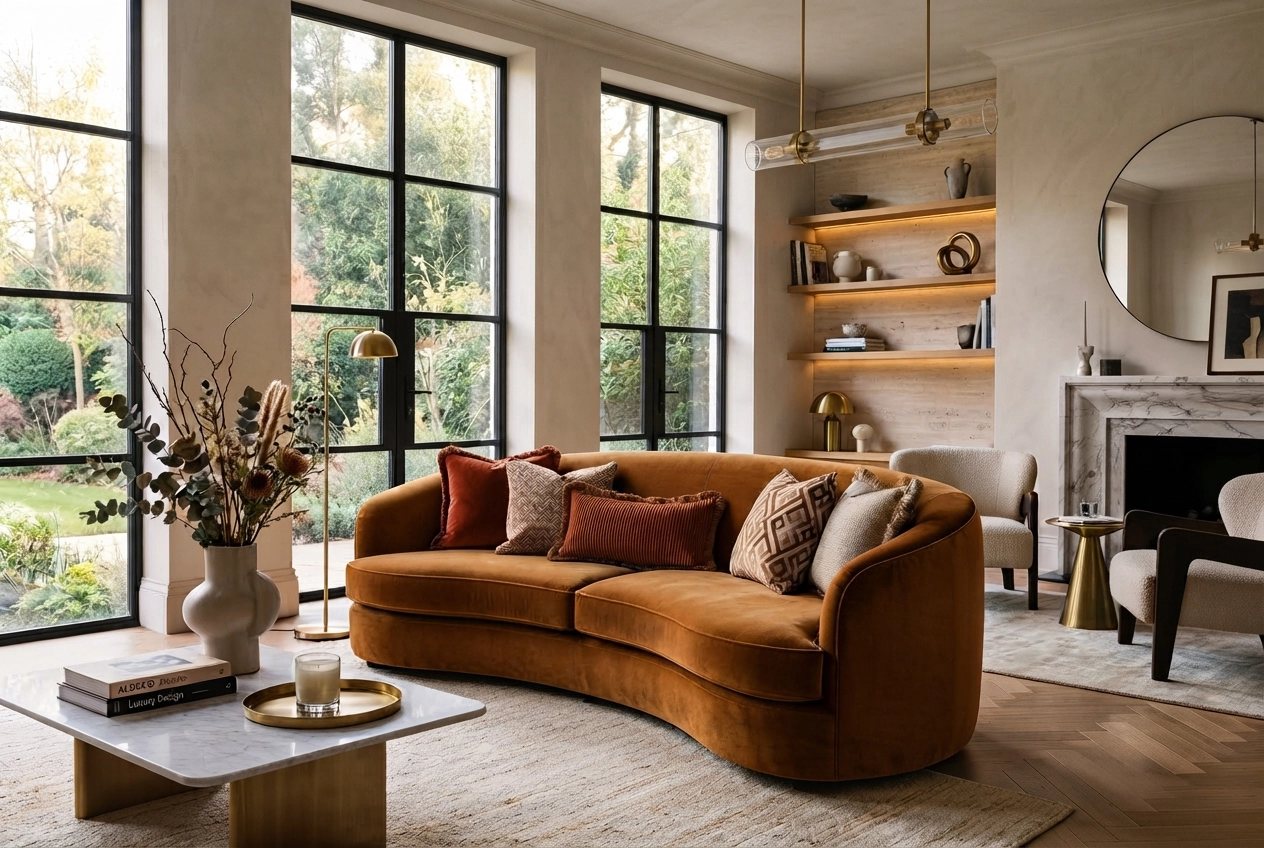
Choosing the right velvet upholstery fabric involves more than selecting a colour or texture. The fabric should suit the furniture, frequency of use and technical requirements of the project. Durability, composition, pile and performance can all influence the final choice.
Step 1: Consider the Intended Use
Start by identifying where the upholstered piece will be used. A residential armchair may have different requirements from a sofa in a hotel or restaurant. The right velvet upholstery fabric should balance aesthetics, comfort and durability according to its intended application.
Step 2: Check Abrasion Resistance
For frequently used furniture, abrasion resistance is an important specification. The Martindale test measures how well a fabric withstands repeated rubbing and can help designers assess its suitability for upholstery.
Aldeco offers velvet fabrics with different performance specifications. For example, Siége Velvet has a Martindale rating of 100,000 cycles, while Ensembles Velvet reaches 45,000 cycles. These differences show why technical specifications should be considered alongside appearance when choosing upholstery fabric.
See more: “What Is Martindale? Understanding Fabric Abrasion Resistance“
Step 3: Consider Composition and Pile
Different fibre compositions can affect softness, appearance, durability and care requirements.
Velvet also has a directional pile. Its orientation changes how light reflects across the surface, which can create variations in colour and sheen. Therefore, consider how the fabric looks under the lighting conditions of the project.
Step 4: Check Technical Requirements
Depending on the application, additional technical specifications may also be important. These can include lightfastness, pilling resistance, fire-retardant properties and care requirements.
For contract and hospitality projects, designers may also need to consider requirements such as fire performance, durability and maintenance.


Order a Fabric Sample
Before specifying velvet upholstery fabric, assess a physical sample whenever possible. Check its colour, texture, pile direction and overall appearance in the intended space. This helps designers assess how the fabric looks and feels before making a final selection.
The right fabric should respond to both the design concept and the practical requirements of the project. By checking durability, composition, pile, technical specifications and a physical sample, designers can make a more informed choice.


