
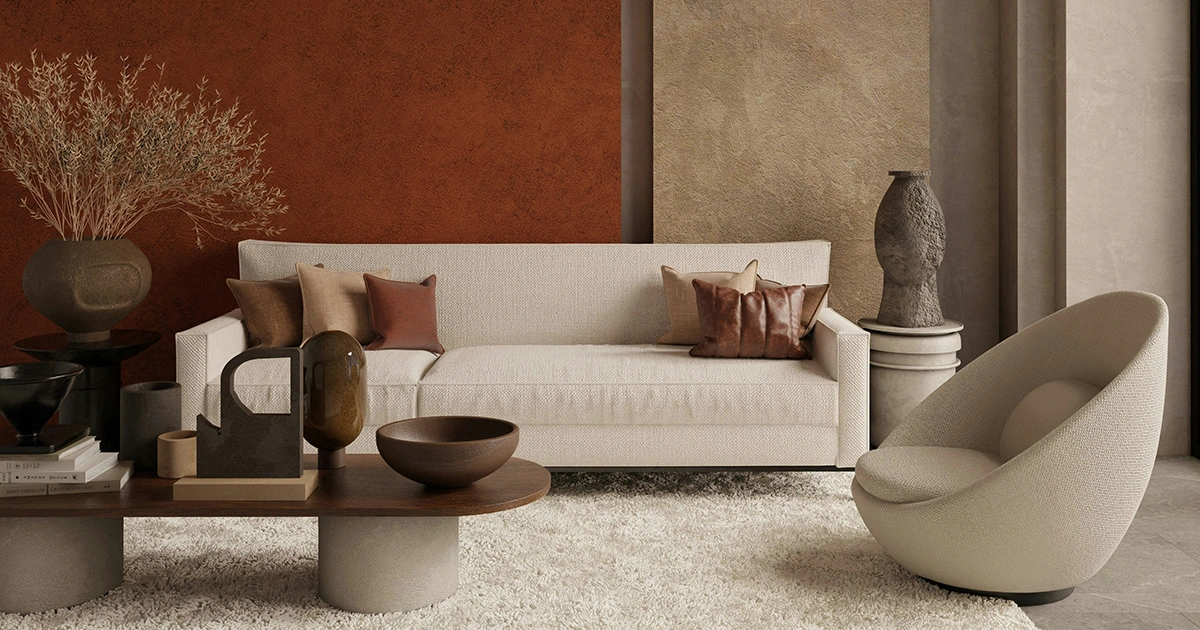
Interior design trends 2026 reflect a new balance between aesthetics, sustainability, and functionality. Architects and interior designers are adopting 2026 design trends that respond to changing lifestyles and environmental concerns.
Across residential and commercial environments, interior trends 2026 highlight comfort, flexibility, and material authenticity. Compared to interior design trends 2025, the new 2026 interior trends introduce warmer palettes, richer textures, and more eco-friendly solutions.
Interior design trends 2026: 5 key ideas
1. Soft minimalism in 2026 interior trends
Minimalism continues to influence 2026 interior design, but in a softer and more layered interpretation. Instead of stark environments, interiors now focus on warm neutrals and tonal harmony, creating calm and balanced spaces.
Key characteristics include:
- Warm whites and soft neutral palettes
- Subtle layering of materials and finishes
- Integration of textiles and wallcoverings for added depth
This approach maintains visual clarity while allowing interiors 2026 to feel more tactile, comfortable, and refined.
2. Warm palettes in 2026 home decor color trends
A defining element of 2026 home decor color trends is the transition toward warm, nature-inspired tones. Cooler greys are being replaced by organic colors that create grounding and emotional balance.
Common directions in 2026 interior trends include:
- Terracotta, clay, and deep brown tones
- Olive green and muted earthy shades
- Soft pastels inspired by nature
These palettes are often expressed through textiles and wallpapers, reinforcing the material-driven approach of 2026 interior design trends.
The Pantone Color of the Year 2026, associated with soft tones like Cloud Dancer, reflects the calm and refined character of interior design trends 2026.
See more: Pantone 2026: Cloud Dancer as the Color of the Year
3. Pattern and texture in 2026 design trends
After years of minimalism, 2026 interior trends reintroduce patterns in a controlled and intentional way. Patterns are layered to create rhythm without overwhelming the space.
Key applications include:
- Mixing florals with geometric or striped patterns
- Layering textiles within a cohesive palette
- Using pattern to define zones and focal points
Textiles and wallcoverings play a crucial role, adding depth, identity, and storytelling within interior design 2026 trends.
4. Multifunctionality in 2026 interior design trends living room
Flexibility is central to 2026 interior trends, especially in residential spaces. Homes must now support multiple functions within a single environment.
Key strategies include:
- Zoning with textured wallpapers and materials
- Using durable fabrics in high-traffic areas
- Integrating storage into furniture design
In 2026 interior design trends living room layouts, spaces seamlessly transition between work, relaxation, and social interaction, without compromising aesthetics.
5. Sustainable materials interior trends 2026
Sustainability is a core pillar of 2026 inetrior design. Designers increasingly prioritize long-term value, durability, and responsible sourcing.
Main characteristics include:
- Use of natural materials such as wood, linen, stone, and clay
- Emphasis on longevity and quality finishes
- Focus on texture over decorative excess
In textiles and wallcoverings, this translates into the use of natural fibers and tactile surfaces, reinforcing a more responsible approach to 2026 interior design.
Aldeco supports this vision and follows interior trends 2026 with collections that reflect sustainability, quality, and contemporary aesthetics.


Spring 2026 home decor trends
The spring 2026 home decor trends highlight freshness, lightness, and a renewed connection to nature. This seasonal shift influences 2026 interior trends, bringing in softer tones, lighter fabrics, and more breathable materials.
Textiles and wallcoverings are key in this transition, allowing interiors to adapt seasonally without structural changes. In 2026 interior design, this flexibility is essential, as spaces must evolve with both time and lifestyle.
Interior design trends 2025
The evolution from interior design trends 2025 to interior design trends 2026 highlights a stronger emphasis on emotional design and sustainability. While 2025 interior trends focused on minimalism and functional simplicity, 2026 interior trends introduce a more human-centered approach, prioritizing comfort, tactile materials, and environmental responsibility.
This transition reflects a broader shift in 2026 interior design, where designers aim to create spaces that not only look aesthetically refined but also enhance well-being and sensory experience. In parallel, 2026 design trends incorporate natural materials, softer palettes, and layered textures, moving away from the rigid and often impersonal look associated with earlier trends.
Compared to interior trends 2025, the 2026 interior trends living room designs are warmer and more expressive, integrating nature-inspired elements and adaptable layouts.


