
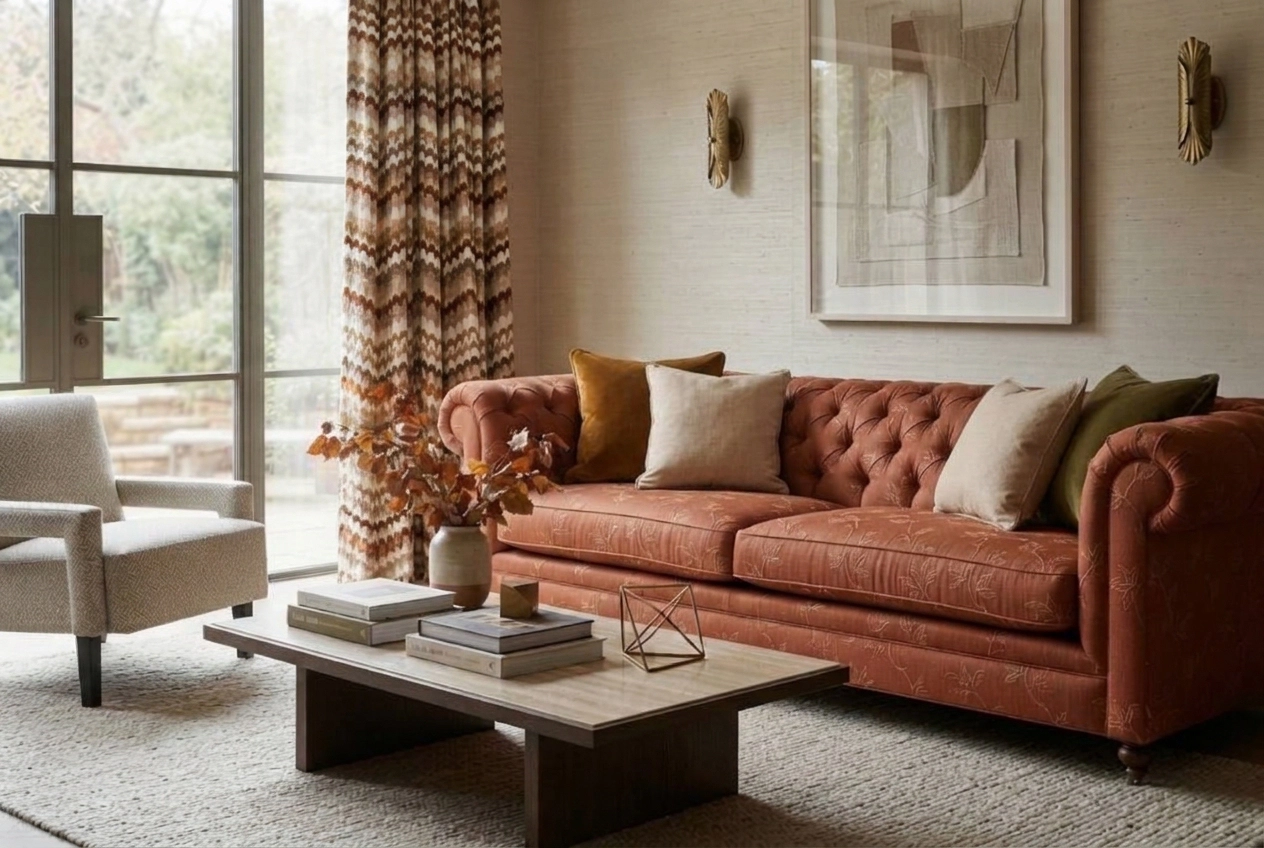
Embroidered fabric brings depth, texture and decorative detail to interior spaces. By combining different base materials with decorative stitching, embroidery transforms plain textile surfaces into distinctive design elements. From subtle botanical patterns to expressive geometric motifs, embroidered fabrics offer versatile possibilities for upholstery, curtains and decorative accessories.
What Is Embroidered Fabric?
Embroidered fabric is a textile featuring decorative patterns created with threads stitched onto a base material. Unlike printed fabrics, where designs are applied to the surface, embroidery introduces a tactile dimension that can be felt and seen.
The technique can be performed by hand or machine, depending on the desired finish, complexity and production requirements. The choice of base fabric and embroidery thread also influences the final appearance, creating different levels of texture, relief and visual contrast.
Different Types of Embroidered Fabric
One of the defining characteristics of embroidered fabrics is their versatility. The technique can be applied to different textile bases, each offering distinct aesthetic qualities.
- Cotton embroidered fabric provides a versatile foundation for decorative stitching, accommodating both delicate motifs and more structured patterns.
- Linen embroidered fabric combines natural-looking textures with decorative details, creating an understated and organic appearance.
- Chenille embroidered fabric introduces a softer, more tactile dimension, combining the depth of chenille with the visual interest of embroidered patterns.
Embroidery also varies in design. Floral embroidery introduces organic shapes and botanical references, while geometric and abstract patterns create a more contemporary decorative effect.
See more: “Jacquard Fabrics: Types, Textures and Characteristics“
How to Use Embroidered Fabric in Interior Design
The decorative potential of embroidered upholstery fabric makes it particularly interesting for furniture and statement pieces. Applied to armchairs, headboards or occasional seating, embroidery adds character and creates visual interest through texture and pattern.
Aldeco’s VALLADO combines a cotton satin base with detailed embroidery, creating a refined surface with subtle lustre and decorative depth. Its Autumn Harvest colourway makes it an interesting option for elegant curtains and upholstery, bringing warmth and character to interior settings.
For a more expressive approach, BELLE TERRE in Tahitian Garden combines a natural linen base with colourful floral embroidery. This combination introduces an organic decorative element, making it suitable for upholstery and interiors where botanical patterns contribute to the overall design.
Beyond furniture, embroidered curtains can introduce texture and decorative detail to windows, while embroidered fabrics used for decorative cushions create visual continuity between different elements of a room.
Bringing Texture and Character into Interior Spaces
Choosing the right embroidered fabric involves considering the base material, pattern, texture and intended application. The balance between decorative appeal and technical performance is equally important, particularly when selecting upholstery fabrics for residential and hospitality projects.
At Aldeco, embroidered fabrics offer interior designers and architects different ways to introduce texture, craftsmanship and individuality into their projects. Through carefully selected materials and distinctive patterns, these textiles bring an additional layer of character to contemporary interiors.


