
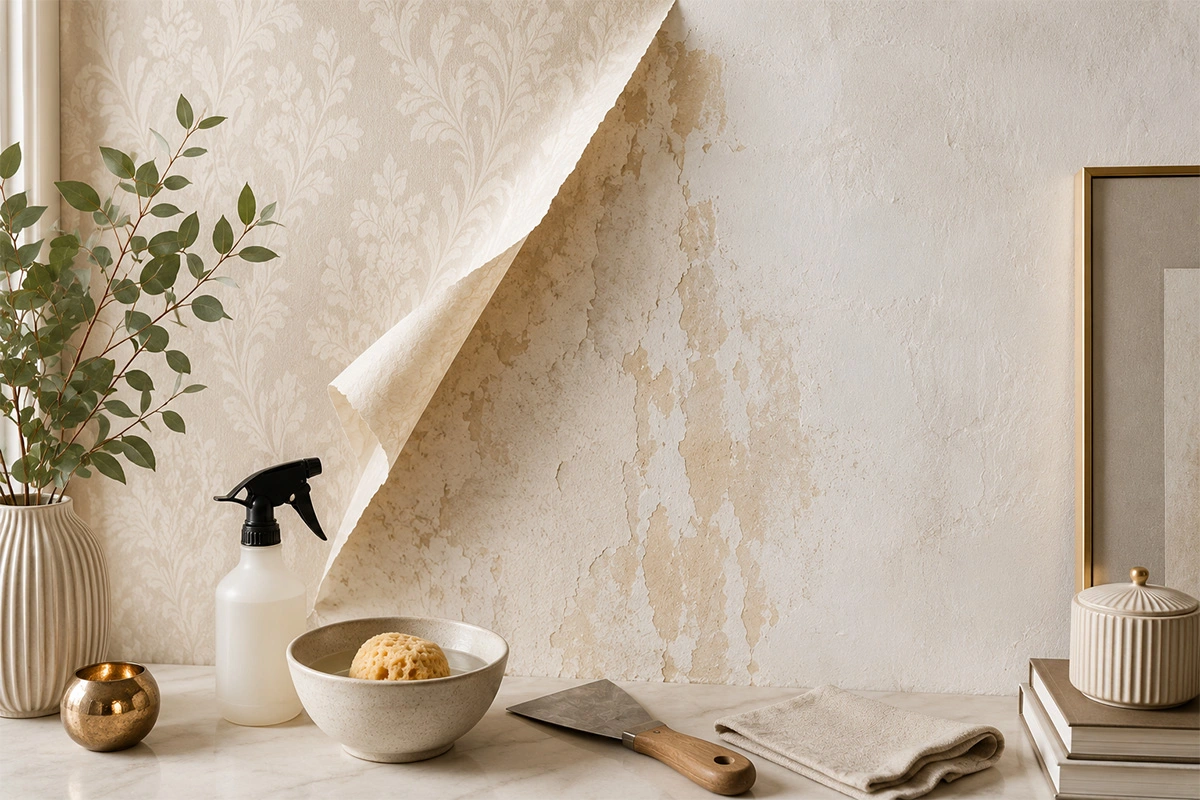
Removing wallpaper is a common step for homeowners, interior designers, and renovation professionals who want to refresh a space. Knowing how to remove wallpaper correctly helps protect the wall and prepares it for a new finish. Today, modern tools and techniques make the process faster and more efficient, reducing damage and saving valuable time.
In this article, discover the best way to remove wallpaper, along with practical tips and simple techniques to remove wallpaper quickly and achieve a smooth, clean finish.
How to remove wallpaper: step-by-step guide
The first step in how to get wallpaper off the wall is identifying the wallpaper type. Different materials, including vinyl, paper, and painted wallpaper, require specific removal techniques.
The best way to remove wallpaper includes the following steps:
- Peel the wallpaper from the top;
- Soften the adhesive with warm water or a wallpaper remover;
- Scrape away stubborn sections carefully;
- Work in small sections;
- Remove any remaining wallpaper glue;
- Repair and prepare the wall for its new finish.
Once the wall has been properly prepared, the next step is installing new wallpaper. Aldeco’s wallpapers offer a wide range of designs for every interior style.
Read more: “How to hang wallpaper on wall: step-by-step guide“


1. Peel the wallpaper from the top
The first step in how to peel off wallpaper is to start at the top corner of the wall and gently pull it downward. Some sections may come away in large strips, while others leave the backing attached. Pull slowly and steadily to avoid damaging the wall surface.
2. Soften the adhesive
If the wallpaper does not peel away easily, spray warm water or a wallpaper removal solution onto the remaining paper and leave it to soak for 10–15 minutes. This is one of the best ways to remove wallpaper paste, as it softens the adhesive before scraping.
3. Scrape stubborn sections carefully
One of the challenges in how to remove stubborn wallpaper is lifting the remaining sections after soaking. A plastic scraper helps remove these areas while protecting the wall surface.
4. Work in small sections
When learning how to remove wallpaper easily, one of the best approaches is to work in small sections. This keeps the adhesive moist and makes the process more controlled and efficient.
5. Remove wallpaper paste
Even after the wallpaper is gone, adhesive residue often remains. This is where how to remove wallpaper paste becomes important. The most effective method is to soften the residue with warm water and gently clean the surface until it is completely smooth.
6. Repair and prepare the wall
Once the wallpaper has been removed, inspect the wall for any damage. Fill holes, smooth rough areas, and sand if necessary. This final step ensures a clean surface after how to remove old wallpaper and prepares the wall for a new finish.

How to remove painted wallpaper
Learning how to remove painted wallpaper is more challenging than standard wallpaper removal because the paint layer seals the surface and prevents moisture from reaching the adhesive underneath. As a result, the process is slower and often requires extra preparation.
The main difference in this case is the need to break the painted layer before applying moisture, especially when dealing with stubborn wallpaper. Scoring is essential, as it allows warm water or a wallpaper removal solution to penetrate more effectively.
After scoring, the surface usually requires longer soaking times before the adhesive begins to loosen. Removal should then be done carefully with a plastic putty knife, as painted wallpaper often comes off in smaller sections rather than full strips.


