
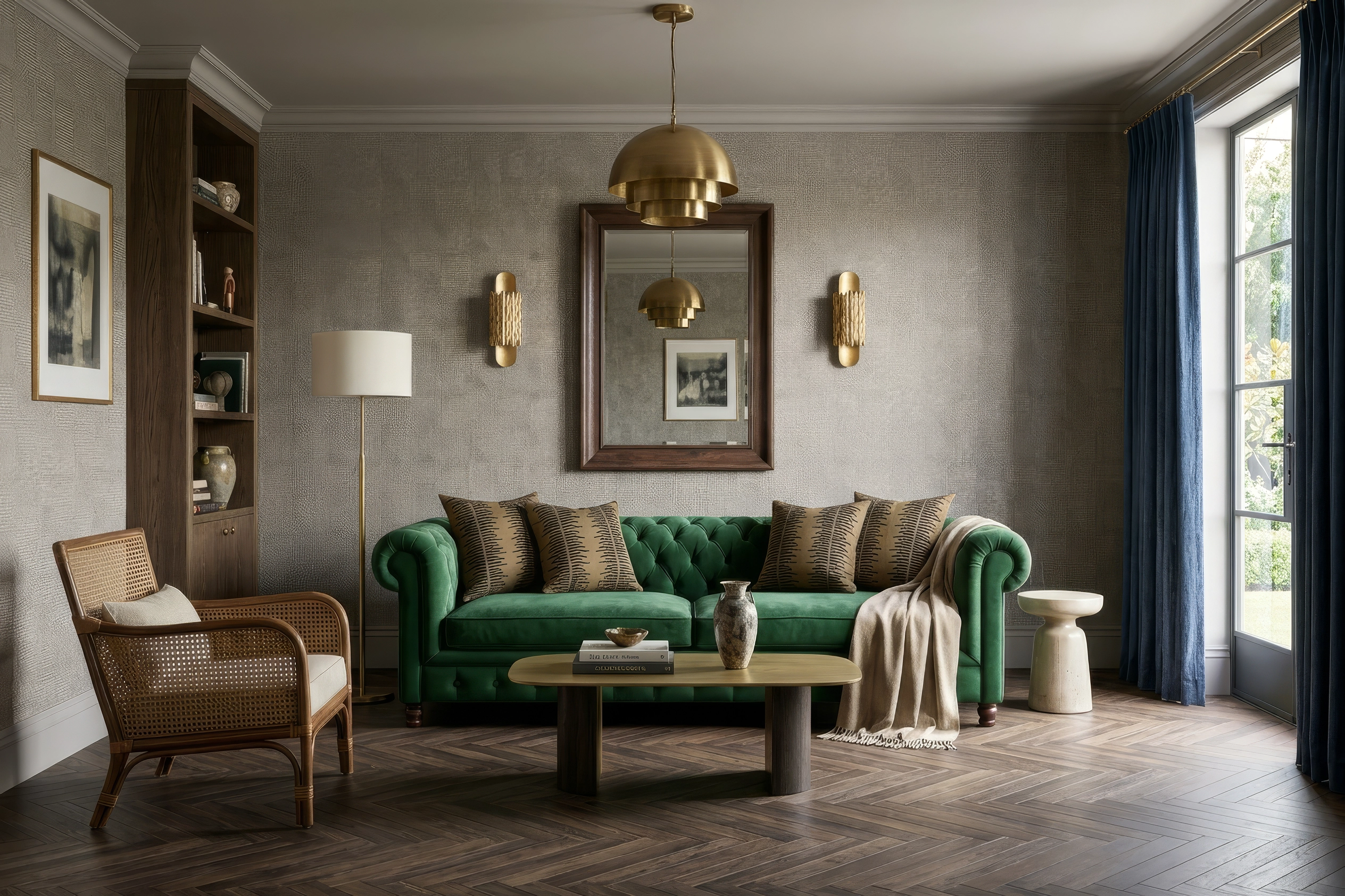
A successful living room interior design project goes beyond furniture and colour palettes. The selection of upholstery fabrics, curtain fabrics and wallcoverings plays a fundamental role in shaping the atmosphere, functionality and visual identity of a space. For interior designers and architects, combining these materials thoughtfully creates interiors that feel cohesive, comfortable and distinctive.
1. Choose Upholstery Fabrics That Define the Space
Sofas and armchairs often become the focal points of a living room. Selecting the right upholstery fabrics means balancing texture, colour, durability and comfort. Velvet introduces depth and sophistication, while bouclé and textured weaves create a more tactile, contemporary aesthetic.
For a distinctive statement, FAROUCHE, from Aldeco’s VEVA II collection, combines a jacquard construction with intricate embroidery, featuring elegant vertical stripes and abstract animal-inspired patterns. Alternatively, FELINE combines a soft, velvety chenille ground with embroidered animal-inspired motifs, including elongated shapes and zigzag details that bring rhythm and movement to a design. Both fabrics introduce texture and character, making them interesting options for expressive upholstery and contemporary interiors.
2. Use Curtain Fabrics to Control Light and Add Texture
Beyond their decorative appeal, curtains for living rooms influence natural light, privacy and the perceived proportions of a room. Lightweight fabrics create an airy atmosphere, while heavier materials introduce visual weight and a more enveloping feel.
When choosing curtain fabrics, consider how their colour, weave and drape interact with the upholstery and architectural features. Coordinating tones can create continuity, while contrasting textures add dimension without overwhelming the space.
3. Introduce Character Through Wallcoverings
Decorative wallcoverings offer another opportunity to establish a focal point and reinforce the design concept. Geometric patterns, organic motifs and tactile finishes can transform a feature wall into an integral part of the composition.
For a balanced result, pair expressive wallcoverings with complementary upholstery and curtain fabrics. Repeating a colour or subtle motif across different surfaces helps connect the elements, creating a considered and harmonious interior.
See more: “10 Modern Interior Design Ideas for a Characterful Space“
4. Create a Cohesive Material Palette
Effective living room design ideas start with a well-considered material palette. Rather than matching every element, focus on creating a balance between colours, patterns and textures. Pair patterned upholstery fabrics with more understated curtain fabrics, or use a textured wallcovering to complement the tones of a sofa or armchair. This approach allows individual materials to stand out without competing for attention.
Lighting is equally important when selecting materials. Natural daylight can reveal subtle variations in colour and texture, while artificial lighting may enhance warmer tones or emphasise surface details. Considering these effects helps ensure that fabrics and wallcoverings work together throughout the day, creating a consistent visual result.


Bring Your Living Room Design Vision to Life
Creating a successful living room interior design project means finding the right balance between aesthetics, texture and functionality. By combining carefully selected upholstery fabrics, curtain fabrics and wallcoverings, designers can create cohesive interiors with a distinctive identity.
At Aldeco, a curated selection of fabrics and wallcoverings offers interior designers and architects the opportunity to explore different textures, patterns and finishes, bringing their creative visions to life across residential and hospitality projects.


