
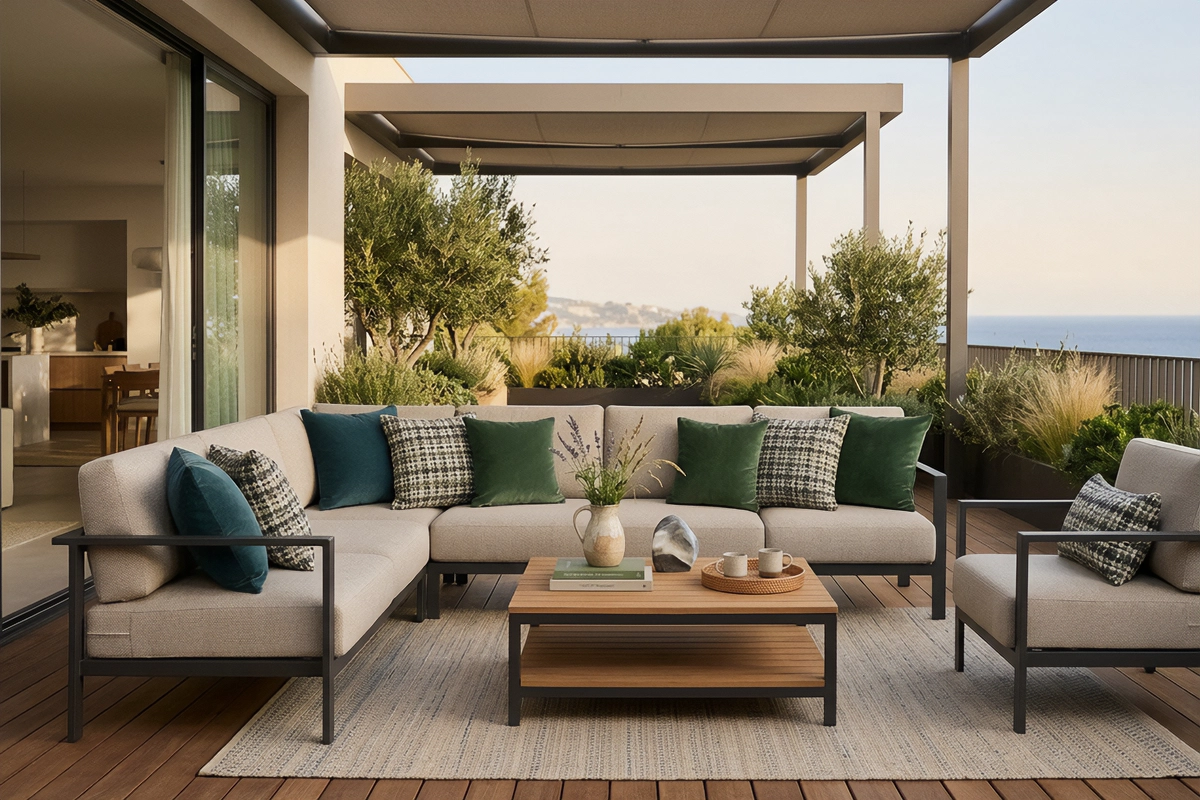
Choosing the right outdoor fabrics is essential for creating comfortable, durable and visually appealing exterior spaces. From garden sofas to terrace seating and decorative cushions, outdoor textiles must withstand changing environmental conditions while maintaining their appearance. Selecting the right material requires considering factors such as sun exposure, moisture, durability and maintenance to find the best fabric for outdoor furniture.
1. Consider Sun Exposure and Weather Resistance
Sunlight is one of the main factors affecting outdoor textiles. Prolonged exposure to UV radiation can cause colours to fade and gradually weaken textile fibres. Therefore, UV-resistant fabrics with good lightfastness are particularly important for furniture placed in gardens, open terraces and poolside areas.
Lightfastness ratings indicate how well a fabric retains its colour when exposed to light. For example, COLETTE IN/OUTDOOR by Aldeco features a lightfastness rating of 7, making it an interesting option for outdoor upholstery where colour retention is an important consideration.
Moisture protection should also be evaluated. Water-repellent fabrics have finishes that encourage water to bead and run off the surface, while water-resistant and waterproof fabrics offer different levels of protection against water penetration. Breathability and drying time are equally relevant, particularly for upholstered furniture and outdoor cushions.
2. Evaluate Durability and Abrasion Resistance
Outdoor furniture is subject to frequent use, friction and everyday wear. Sofas, dining chairs and lounge seating experience repeated contact, making abrasion resistance an important factor when selecting outdoor upholstery fabric. A durable textile helps preserve its surface and appearance, even with regular use.
The martindale test measures a fabric’s resistance to surface abrasion, with results expressed in rubbing cycles. Higher results generally indicate greater resistance to friction, although the appropriate rating depends on the intended application and expected intensity of use.
For example, BELLE TWEED IN/OUTDOOR by Aldeco offers 30.000 martindale cycles, an important indicator of its resistance to everyday wear in upholstery applications. Its textured tweed appearance also demonstrates that choosing a durable fabric does not mean compromising on decorative detail.
See more: “What Is Martindale? Understanding Fabric Abrasion Resistance“
3. Understand Fabric Composition and Construction
Different fibres offer distinct characteristics for exterior applications. Acrylic outdoor fabric is valued for its colour retention, particularly when solution-dyed, while polyester outdoor fabric offers versatility and can be engineered with specific finishes for outdoor use. Polypropylene fabric, also known as olefin, is appreciated for its low moisture absorption and resistance to wear.
However, fibre composition alone does not determine performance. The weave, fabric construction and finishing treatments also influence durability and suitability for outdoor use. When comparing performance outdoor fabrics, it is important to consider the complete technical specifications rather than focusing exclusively on fibre content.
4. Prioritise Maintenance and Practicality
Ease of cleaning is another important consideration when selecting outdoor furniture fabric. Easy-clean fabrics can simplify the removal of everyday dirt, spills and stains, making them particularly practical for dining areas and frequently used lounge spaces.
Always check the manufacturer’s cleaning recommendations and consider how much maintenance the textile requires. The intended application should guide the decision, as garden furniture, terrace seating and decorative cushions may have different practical requirements.


Choosing Outdoor Fabrics for Long-Lasting Spaces
Ultimately, selecting the right outdoor fabrics means looking beyond colour and texture. Sun exposure, moisture, durability, composition and maintenance all influence how a textile performs over time. Evaluating these characteristics together helps identify fabrics that meet the practical demands of each environment, from exposed terraces to sheltered outdoor lounge areas.
At Aldeco, the selection of decorative fabrics brings together technical performance and design versatility for interior and exterior projects. Textures, colours and patterns offer opportunities to create outdoor spaces that reflect the same attention to detail as interior environments. By choosing textiles suited to their intended application, designers can create settings that combine comfort, durability and a cohesive aesthetic.


